Long before national headlines had a focus on transgender athletes within our sports, there were people truly living the lifestyle both on and off the court.
My first year on the AAU circuit in Chicago, where most amateur athletes regularly face each other and compete in front of collegiate coaches for scholarships, I met a young Kye Allums from Minnesota. At the time, we were solely competitors. Fast forward, Kye would become the first openly transgender athlete to compete in NCAA Division 1 basketball. At the time, this was an anomaly, but now the national conversation has evolved tremendously.
The debate over transgender participation in sports has amplified after recent federal and NCAA policy changes that has totally reshaped eligibility rules for college athletes across the United States. For many athletes, advocates, and even sports organizations are starting to raise issues from the feeling of college sports.
Earlier this year, President Donald Trump signed an executive order making federal agencies to interpret Title IX protections in somewhat of a way that would limit participation in women’s sports. Specifically assigned to athletes who were born female. The order prompted the NCAA to revise the participation policy for transgender athletes, changing the overall view for college programs nationwide.
The NCAA announced that under the new rules, student-athletes assigned male at birth are not eligible to compete in women’s events, but they may still practice with the women’s teams and receive the benefits associated with team membership. Now, athletes assigned female at birth, like Allums, who undergo testosterone growth, will face restrictions while competing. In fact, she was unable to compete after the second year of Testosterone treatment.
Allums said, “I knew the repercussions of taking testosterone therapy, but I wanted to stay true to who I was and firmly believed in it. With the hope of the NCAAA understanding who I was.”
The organization said the policy changes were meant to create a one accord standard. In a statement announcing the policy, the NCAA said the goal was to “align college athletics participation rules with federal guidance while maintaining competitive fairness in women’s sports.”
For former athletes, for Allums this issue is deeply personal and understandably so.
Kye was at the center of this conversation in 2010 while the two of us were still competing.
For those unaware, Allums made history at George Washington University in 2010. Since that time, Allums has been an advocate, telling her story about identity, about the competition, and leading the new generation into belief and faith of change.
Kye was always a competitor. I remembered. The games would be intense, and that now translates to how she thrives in life and being this historical figure within the LGBTQ community.
Allums said, “I feel it is my duty to the new generation. It took voices like myself to raise awareness and pave the way. What felt like a job done, we now must go back to the drawing board with Trump’s new policy.”
Allum’s story remains one of the earliest examples of how transgender athletes have had to navigate their participation in high-level sports. How are they seen? When Allums came out publicly as trans, the NCAA did not yet have the tools or comprehension to address how the athletes should participate, thus ruling her ineligible.
Since then, rules have evolved several times, reflecting political, medical, and cultural discussions about gender identity and athletics.
The NCAA is not the only institution dealing with these questions.
According to data compiled by the Movement Advancement Project, more than two dozen American states have enacted laws restricting transgender athletes from competing in sports that align with their gender identity at the K-12 or collegiate level.
Supporters of those policies have argued that they are necessary to preserve the fairness in women’s sports.
Organizations such as the advocacy group Champion Women have argued that sex-based eligibility rules are essential to protecting opportunities for female athletes.
“Sports categories exist for a reason,” the organization states on its website. “Women’s sports were created to ensure female athletes have equal opportunities to compete and succeed.”
But others strongly disagree.
Groups such as Athlete Ally, a nonprofit organization focused on LQBTQ inclusion sports, say policies restricting transgender athletes risk excluding athletes from competition altogether.
“Sports should be a space where everyone has the opportunity to participate authentically,” Athlete Ally wrote in a statement responding to recent policy changes.
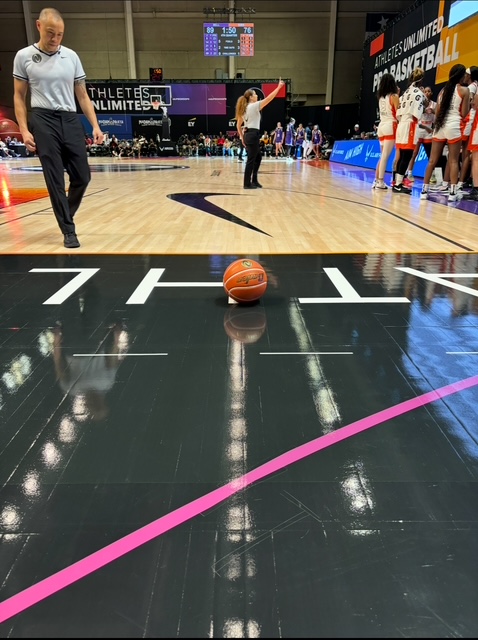
Other athletes have weighed in. I spoke with Layshia Clarendon, whom I competed in the WNBA’s supplemental league Athletes Unlimited. Clarendon has been an outspoken advocate for LGBTQ inclusion in sports.
Clarendon, who uses multiple pronouns such as he/him, they/them, has often spoken about the importance of creating space for athletes and gender.
Clarendon says, “It’s important for athletes’ voices to be included in conversations about the sports policies, specifically when those policies are directly affecting us.”
The NCAA’s rule change applies specifically to college athletics, Clarendon is a pro. The broader debate around transgender athletes still resides.
In January 2026, the U.S Supreme Court heard arguments related to state laws that restrict transgender athlete participation in school sports. Legal experts say the decisions in those cases could influence future policies.
For now, schools, athletes, and organizations will have to accept the change.
Eligibility questions will remain one of the most complicated parts of the new rules. Athletes who were previously approved to compete under earlier NCAA guidelines must now comply with the new updated policy moving forward. Leaving uncertainty among countless athletes on what the future holds.
For those who have been through this firsthand, the conversation will go past politics.
At its core, the debate over transgender participation in sports reflects larger questions about how fair things are. How will the athletes feel a sense of belonging?
For former athletes like Allums and Clarendon, those questions are not theory. They are personal to them.
As the policies continue to move and legal challenges happen within the courts, the future of transgender participation will be uncertain. What is clear, however, is that the choices of the athletes themselves will continue to play a central role in shaping the conversation

 HOPE ELAM-HUETT
Leave a comment