How women’s basketball is changing the game on and off the court
By Hope Elam
October 19, 2025
“It’s great to see the growth of the game and how the women are able to expand their brand without backlash,” former WNBA star and current Chicago Sky assistant coach Tamera “Ty” Young told me when I asked about how much women’s basketball has changed. “I was getting hell for pursuing things outside of basketball.”
Her words tell something powerful about the new era of women’s basketball: Female athletes are no longer forced to choose between being taken seriously as competitors and embracing their full identities as people, entrepreneurs, fashionistas, and cultural figures.
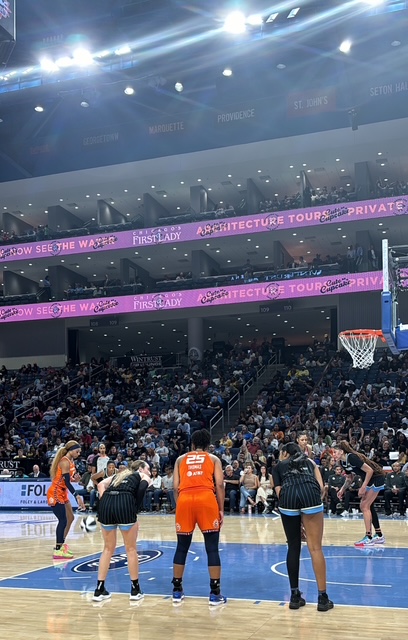
It is hard to ignore the tremendous leap women’s basketball has taken over the last few years. Exposure that was once mostly found on the international scene has finally made the jump to the United States, and it has been great to watch. For years, the women’s game lived in the shadows of its male counterpart, often treated as less exciting and not marketable. Those days are long gone. Women have fought tirelessly for equality within the sport, and the result is a completely new landscape defined by visibility, cultural relevance, and economic opportunity.
That visibility has been especially clear on television. For years, women’s basketball struggled for coverage, often landing on the little brother platforms such as ESPN3 or ESPNU. That changed dramatically in 2023, when the NCAA women’s championship game drew 9.9 million viewers, surpassing the men’s final for the first time, according to Nielsen ratings. That game headlined by Iowa star Caitlin Clark and LSU’s Angel Reese was the turning point. Suddenly, women’s basketball was a primetime event that hit social media and the game took off.
Stars like Paige Bueckers and JuJu Watkins have followed in those footsteps, all now have massive social media followings and mainstream media coverage. Women are now regularly featured on ESPN’s SportsCenter Top Ten, their highlight reels going viral as dunks, crossovers, and buzzer-beaters changing old assumptions about what women’s basketball can be. This uproot in visibility at the college level has fueled greater attention to the WNBA, helping the league reach its highest TV ratings in over two decades.
A major driver of this growth has been the Name, Image, and Likeness (NIL) era. The 2021 policy change allowed college athletes to profit from their personal brands for the first time and women’s basketball has been one of its biggest beneficiaries.
Athletes like Clark, Reese, and Bueckers have inked lucrative endorsement deals with brands like Nike, Gatorade, Reebok, and State Farm. According to On3’s NIL valuation rankings, several women’s basketball players are among the top 10 earners in college sports. These deals aren’t just money wins; they allow women to build personal brands while still playing at the amateur level, something that was once nearly impossible.
“It used to be if you did anything outside the game, people questioned your dedication,” Young said. “Now, these girls can do it all. They can be athletes, influencers, businesswomen, whatever they want.”
To understand the ripple effect of NIL and how it has put these women in a great position where their fanbases are incredibly loyal and engaged, and brands love that. We’ve seen major increases in campaign budgets for women’s basketball because it’s finally seen as a growth market, Head Coach Mo Reid of Bellamarine University tells me.
Social media has amped that growth even further. Platforms like TikTok, Instagram, and X have given players direct lines to their fans, bypassing traditional gatekeepers. These athletes can now curate their own narratives, highlight their game, showcase their personalities, and build communities around their stories.
One of the clearest examples of this is tunnel fashion. Just like in the NBA, women’s basketball players have made pregame tunnel walks their personal runway. Outfits are photographed, posted online, and often go viral within minutes. Players like Angel Reese, Cameron Brink, and Skylar Diggins have become style icons, landing fashion partnerships with brands like Nike, Adidas, Puma, Coach, Prada, and Louis Vuitton. Reese recently became the first athlete to walk Victoria Secret’s fashion show.
For many players, fashion is another way to express themselves. It shows their personality beyond the court and gives fans more reasons to connect with them. It’s also another way they can build their brand and attract sponsors. What used to be just a walk into the arena has turned into a major cultural moment for women’s basketball.
Hashtags and fan pages dedicated to women’s basketball have exploded. Players share behind-the-scenes content, fashion looks, training regimens, and everyday life moments, building authentic relationships with their supporters. This two-way engagement has created a loyal, passionate fan base something that marketers and networks have taken note of.
For Ty Young, this is personal. When she chose to do reality TV during her playing career, the response was often negative. “I chose to do reality TV to increase my visibility,” she said. “But it ultimately led to the downfall of my career.” At the time, the idea of a female athlete embracing entertainment, branding, and self-promotion was treated with skepticism. But today, those same decisions can boost an athlete’s visibility, income, and influence.
Young’s own post-playing career shows how far the game has come. She’s now signed with Reebok, appeared on multiple television shows, and become a recognizable figure in pop culture giving proof that a woman in basketball can be more than just a pretty face.
The future of the sport is alive and expanding. As women continue to build personal brands, secure financial independence with the new bargaining agreements, and push for gender equality, their impact on the game will only grow. This mix of the rise of their media exposure, the continuing on their likeness, and a direct line to the fans will and is reshaping basketball’s cultural landscape.
Fan engagement, corporate investment like Breanna Stewart and Napheesa Colliers Unrivaled, and media coverage will all continue to rise, paving the way for the next generation of young girls who see women thriving in spaces that were once closed to them. “The women have arrived,” Young told me. And this time, they’re here to stay.
AUDIO

 HOPE ELAM-HUETT
Leave a comment